The temporary storage warehouse says the 'control figures' do not match, so delivery cannot be closed out. The importer knows only that the goods remain in storage and costs keep rising.
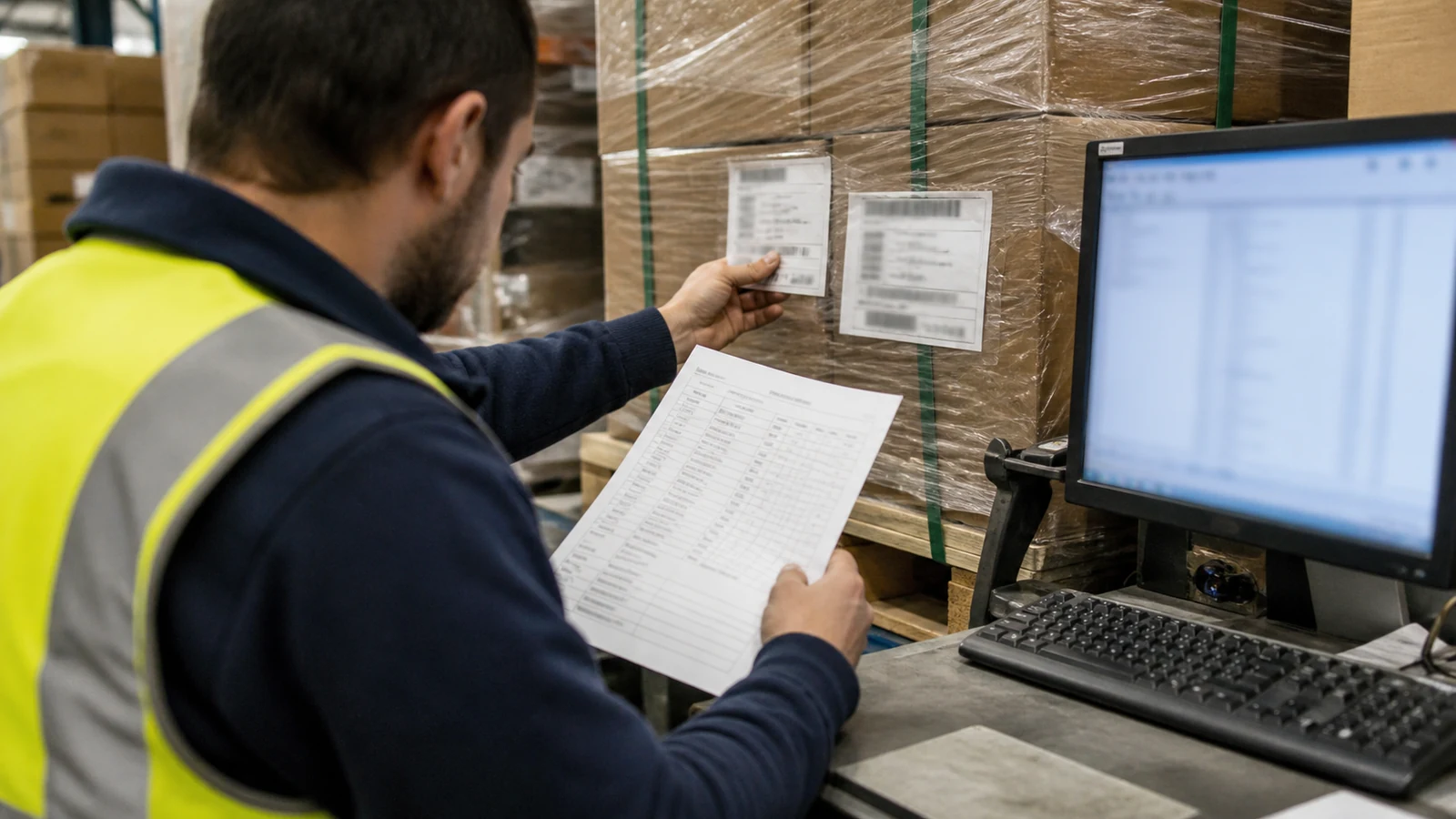
In a typical Russian import, transit is completed, goods enter an ordinary temporary storage warehouse, and a declaration and release follow. Each stage produces its own record: transit completion, registration of temporary storage documents, the ДО‑1 report, goods declaration, release decision, warehouse notification, handover documents and ДО‑2 report. None substitutes for the others.
Contents
What ДО‑1 establishes
ДО‑1 records receipt into temporary storage. It does not complete transit, independently create temporary storage status, serve as a declaration or release the goods. ДО‑2 follows actual removal from the warehouse. Rather than asking how to close out delivery, identify the missing document or status, the mismatched field, the source of its value and who may correct it.
Three answers the importer needs
The importer first needs three answers: whether customs has released the goods; whether the warehouse received an authorising notification that identifies the stored consignment; and which legal or technical obstacle prevents handover. The warehouse's exposure for inaccurate reporting and the recipient's right to collect released goods are related but distinct issues.
Why arrival does not complete customs transit
The vehicle's arrival does not itself complete customs transit. The destination customs authority first registers submission of the transit declaration and required documents, then completes the procedure. The general limit is four working hours after registration. If registration occurs less than four hours before closing, the full four-hour period begins with the next working period. A physical customs inspection may justify an extension under the prescribed procedure.
The carrier notification under Russian Ministry of Finance Order No. 57н is generated at transit completion and records that the required operations have not yet occurred. That alone does not establish expiry of the eight- or twelve-hour period. If the responsible parties fail to act, the carrier has a fallback duty to place the goods in temporary storage within Article 152(3) of the EAEU Customs Code's period. Review document registration, transit completion, the other parties' applicable deadline, the carrier notification and the practical opportunity to deliver into storage.

Temporary storage status begins when customs registers the documents submitted for that purpose. In Russia, registration must take place within one hour, allowing for the customs authority's working hours. Registration and ДО‑1 record different events. Registration establishes the customs-law status; ДО‑1 is a warehouse report. The warehouse operator, or a person authorised to store elsewhere, submits it by the end of the working day following actual placement of the goods.
Where the customs post has the storage contract details, it sends the registered data to the warehouse's system. Otherwise, the warehouse or its representative requests the document references and supplies the storage contract; Order No. 444 sets a one-hour response period. A claim that customs failed to send the 'control figures' therefore requires three checks: whether the post had the contract details, whether the warehouse sent a request and what reply it received.
What 'control figures' means in practice
Neither the EAEU Customs Code nor Order No. 444 establishes a separate procedure called 'checking control figures'. The phrase commonly describes data used to connect the physical goods with transit, storage, declaration, release and handover. These may include transport document references, package count, weight, warehouse reference, tariff code, value, currency, declaration item number or an earlier accepted report ID.
Those entries need not match mechanically. Arrival, transit completion, storage document registration, physical placement, ДО‑1 submission, declaration registration, release and removal are different events. Waybill weight and weight recorded on receipt may also differ where an actual discrepancy has been properly documented.
Trace each disputed entry to its source. Establish who created it, the underlying document, when it reached the next party, how a change was recorded and which electronic message was rejected. A reconciliation can expose the gap, but does not authorise alteration of an original document merely to make the figures agree.
Tracing a discrepancy to its source
Package count and weight in ДО‑1 generally come from the receipt check. Where goods remain in a vehicle or container without unloading, the report uses information supplied by customs. The warehouse may then have no independent count or weighing result.
Tariff code, value and alphabetic currency code follow a different rule. Those ДО‑1 fields are completed where the information was supplied by an authorised person or received from customs through data exchange. A blank in an accepted report does not alone prove inaccuracy. Establish whether the warehouse had the information when it prepared the report. It cannot be required to invent a code or value absent from the prescribed sources.
A shortage, damage, deterioration, split consignment or other discrepancy found on receipt or during storage must be documented under the applicable carriage and storage rules. This may require a commercial report, general-form report or another record involving the carrier and interested parties. The warehouse sends it to the customs post within the prescribed six-hour period. If customs discovers the discrepancy during control, customs prepares the records; the post attaches them to ДО‑1 and sends the information to the warehouse. These duties cannot automatically be shifted to the warehouse operator.
Customs release and physical handover are separate
Customs release and physical handover also occur at different times. If the supervising customs post issues the document authorising removal, it sends the warehouse a handover notification within one hour. Where another customs authority issues release, the transfer to the supervising post, preparation of the notification and dispatch to the warehouse must fit within the same hour, measured from the underlying authorising document.
The notification links the released goods to warehouse records through the description, tariff code, package count, weight, value, currency, transport or commercial document and declaration item numbers. A released status in the declarant's system does not establish that the warehouse has received its own notification or can match it to the stored consignment.
Handover follows the time needed to prepare the goods for transport or the contractual period; airports and railway stations use their operating procedures. For a post-release delay, establish the decision time, notification receipt, readiness, collection request, vehicle arrival, gate pass and departure. Only then can the period be attributed to customs, the warehouse, carrier or recipient.
ДО‑2 is due no later than the working day after the goods leave the warehouse. Each partial handover requires a report showing the reduced balance. The sequence matters: ДО‑2 is subsequent reporting, not prior authorisation to hand over goods.
An anticipated difficulty preparing ДО‑2 is not, by itself, a customs-law precondition to handing over goods already released and reliably identified. The warehouse should identify a separate obstacle: no authorising notification, inability to link it to a particular ДО‑1, contractual retention, operational unreadiness or another verifiable reason.
When a mismatch genuinely prevents handover
The position differs where the release notification genuinely cannot be matched to a stored consignment. Order No. 444 requires ДО‑2 to use ДО‑1 data, split-consignment or discrepancy records and the authorising notification. It gives no unconditional priority to one source and does not permit the warehouse to allocate codes, values or declaration items across several ДО‑1 reports without supporting records.
Case No. А41‑99328/2024 concerned this problem. A consignment under one air waybill arrived on two flights, each recorded in a separate ДО‑1. It was then declared under one goods declaration with two items, and the warehouse received one release notification. The records did not show how the two items' codes and values were allocated between the stored consignments. Customs also failed to establish a prescribed way to complete the disputed fields without assumptions. The appellate court upheld the first-instance judgment setting aside the penalties under Article 16.15 of the Russian Administrative Offences Code.
That case does not give warehouses a general right to leave ДО‑2 fields blank. The court assessed a particular configuration in which the prescribed sources did not establish a reliable link and no workable alternative was proved. Where the documents or electronic format establish the allocation, the warehouse must use it.
A statement that the system rejects a document is also insufficient. The written explanation should identify the rejected document type and ID, error code, format version, field, submitted and expected values, rejection time and source for the correct entry. Without them, a technical fault cannot be distinguished from inconsistent documents or a party's reluctance to act.
Addressing an error in ДО‑1
When an error is found in ДО‑1, preserve the original report, electronic signature, acceptance receipt, transport records, receipt report, customs messages and later documents containing the same value. A new file must not overwrite the original evidence trail.
Order No. 444 permits withdrawal of a submitted ДО‑1, ДО‑2 or ДО‑3 only between submission and the applicable filing deadline. A prior information message must give the reasons. This mechanism is unavailable once the customs post has notified the filer of inaccurate or incomplete information.
After that window closes, the order provides no general right to replace an accepted ДО‑1 freely. A letter, discrepancy report or corrected underlying document does not automatically amend it. Such records support the next procedural step and the defence. The response depends on the error's source: an authorised transport party corrects a carriage document; an actual discrepancy needs a report; a warehouse transcription error must be recorded with the original and its cause; an unmatchable authorising notification must be raised with the customs authority that issued it.
The explanation should identify the original value and source, the correct value, when the discrepancy was discovered and the supporting record. 'Technical error' and 'figures do not match' explain neither how it arose nor who is authorised to resolve it.
Who is responsible for warehouse reports
Responsibility for ДО‑1 and ДО‑2 generally rests with the warehouse operator or person authorised to store goods elsewhere. Ownership of the goods alone does not make the owner liable under Article 16.15 of the Russian Administrative Offences Code. The warehouse's penalty risk explains caution, but does not itself create a customs-law right to withhold released goods.
Each separate report may constitute a separate offence. In Case No. А51‑5046/2021, the Supreme Court considered 340 ДО‑1 reports bearing the same incorrect date and treated the incidents separately. That does not automatically determine how many penalties may be imposed under the applicable version of Article 4.4 of the Russian Administrative Offences Code.
Where two or more breaches of the same article are identified in one control exercise and Article 4.4(5) of the Russian Administrative Offences Code applies, punishment is imposed as for one offence unless the Code expressly requires separate penalties. Article 16.15 contains no such specific exception. In Case No. А78‑3147/2025, the courts distinguished the number of reports from sentencing rules for one control exercise. The Commercial Court of the East Siberian Circuit dismissed the cassation challenge in its ruling of 16 December 2025, No. Ф02‑4397/2025, leaving the lower courts' cancellation of the repeat penalty in place.
What to request from the warehouse
Check the formal status of each stage in parallel. For transit, obtain submission registration, any inspection or extension decision and completion evidence. For temporary storage, obtain registration, transmission details, receipt records, ДО‑1 and its acceptance receipt. For declaration, obtain the goods declaration and registration or full refusal. For handover, obtain the underlying release document, transmission to the supervising post, warehouse notification, readiness confirmation, actual removal record and ДО‑2.
Record storage costs, vehicle downtime and delivery delays from the first day, separately from technical correspondence. Costs alone do not prove what caused the delay. Invoices, tariffs, accrual times, correspondence and mitigation efforts are important to establishing the amount of loss and its causal link to the disputed conduct.
Initial document review
What to provide for an initial assessment
The first checks cover the document received, receipt date, current stage and nearest deadline.
- What happened
- A customs document has arrived
- Why it matters
- the first response records your account of the transaction and can affect an appeal, court case, payments and penalties
- Deadline
- receipt date and response deadline
- Scope of work
- initial legal assessment and next step
- document received
- receipt date
- timeline
- previous responses